
Oil & gas, banking and pharma sector stocks stole the show

Usually, a fall in oil prices is followed with a cut in retail prices of auto fuels and the government passes on the benefit to consumers. However, Morgan Stanley believes gains this time around will remain capped.

The BSE benchmark Sensex surged about 241 points to end at 35,165.48 and the NSE Nifty gained 84 points to close at 10,688.65.

Economics and politics both have major roles in determining oil prices.

The 50-share NSE Nifty ended up 37.05 points, or 0.36 per cent, at 10,397.45 points

American refiners closed some of their production, leading to futures trade benchmarked to the West Texas Intermediate going negative.
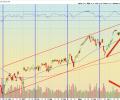
The dollar is king in an intermediate correction, says Sonali Ranade

EIA expects the price of West Texas Intermediate crude oil to average about $100 per barrel in 2012.

India's rupee is likely to remain under pressure due to high prices of crude oil and other commodities, and may stabilise at around 79-80 against the US dollar in the near term, say experts amid limited headroom available with the Reserve Bank to check the weakening of the domestic currency. The currency has slumped over 5 per cent this year after Russia's invasion of Ukraine sent international crude oil prices soaring to a decade high. On Monday, rupee ended at a fresh all-time low of 78.34 (provisional) against the US dollar.
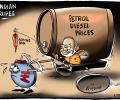
On Tuesday, Petroleum Minister Dharmendra Pradhan met Russian oil giant Rosneft's chief executive officer Igor Sechin and discussed raising crude imports from that country, in addition to talks about going for more acquisitions.

Even if the central bank doesn't pull the trigger later, it is still expected to by the end of the year.

A massive drone strike on the world's largest crude-processing facility operated by Saudi Arabia's Aramco has driven oil prices to their highest level in nearly four months. The attack has knocked out over half of Saudi Arabia's production as it cut 5.7 million barrels per day or over 5 per cent of the world's supply.

Keep exit plans handy, D-day could be the second week of August, writes Sonali Ranade in Market Notes.
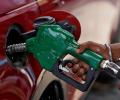
Petrol price on Wednesday touched a new high of Rs 84.45 per litre in the national capital after state-owned fuel retailers hiked prices after a five-day hiatus. Petrol and diesel prices were hiked by 25 paise per litre each, according to a price notification from oil marketing companies. In Delhi, petrol now costs Rs 84.45 per litre and diesel is priced at Rs 74.63. In Mumbai, petrol comes for Rs 91.07 a litre and diesel for Rs 81.34. This is the highest ever price of petrol in Delhi, while diesel is at a record high in Mumbai.


Time to take profits and move to the sidelines in an euphoria, says Sonali Ranade

Oil prices have already fallen over 70 per cent since the downturn began in mid-2014.

The rupee on Friday closed 10 paise higher at 65 against the US dollar on fresh selling of greenback by banks.

The rupee on Friday snapped its two-day gaining streak against the US dollar.

Oil prices continued their rout on Tuesday with Brent crude and U.S. WTI both falling to their lowest in almost six years as a big OPEC producer stood by the group's decision not to cut output to tackle a glut in the market.

US crude was down 25 cents at $52.08.

Traders have all but given up attempting to predict where the new-year rout will end

The rupee had lost 27 paise to close at more than 5-week low.
'China's economy continues to slow and the US Fed may still hike rates before the end of the year.'

The rupee had jumped by 164 paise or 2.39 per cent in previous six trading days.

Increased demand for the American unit from importers weighed on the rupee
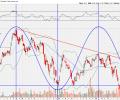
Don't catch falling knives or chase bear rallies no matter how enticing those eight pc green blips look. They may be mouse traps, warns Sonali Ranade

The Indian rupee resumed sharply lower at 66.65 per dollar against last Friday's level of 66.48.

The rupee had last ended at 67.22 per dollar on March 16, 2016.
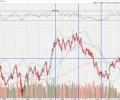
Waiting for capitulation in commodity markets is the better route to profits, says Sonali Ranade.

Oil and select auto heavyweights bore the brunt of selling pressure; ONGC, RIL, Tata Motors, M&M key losers.

The BSE gauge Sensex fell 73.88 points to 35,548.26 and the NSE Nifty slid 17.85 points to 10,799.85, taking cues from tumbling global shares.

The rupee had dropped by 18 paise to end at 66.40

Among the gainers, Sun Pharma topped by rising 3.03 per cent as the weak rupee tempted buyers to accumulate shares of pharma exporters.

The BSE Sensex moved up 103 points to 35,319.35, while the wider NSE Nifty finished at 10,741.70, up 23.90 points.

The broader Nifty too fell for the second straight session and closed with a loss of over 62 points, or 0.54 per cent, at 11,520.30, after hovering between 11,496.85 and 11,602.55.

The 30-share Sensex ended down 159 points at 27,425 and the 50-share Nifty closed down 24 points at 8,299.

The spurt in rates, caused by the rally in international oil prices, has led to the oil ministry asking the finance ministry for a cut in excise duty in the Union Budget 2018-19, to be presented in Parliament next week.

From February to mid-March, oil prices receded rapidly.
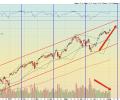
Hoard cash. There will be plenty of time and opportunity at far lower levels, warns Sonali Ranade in her weekly Market Notes
